Running one crew process across many flag states

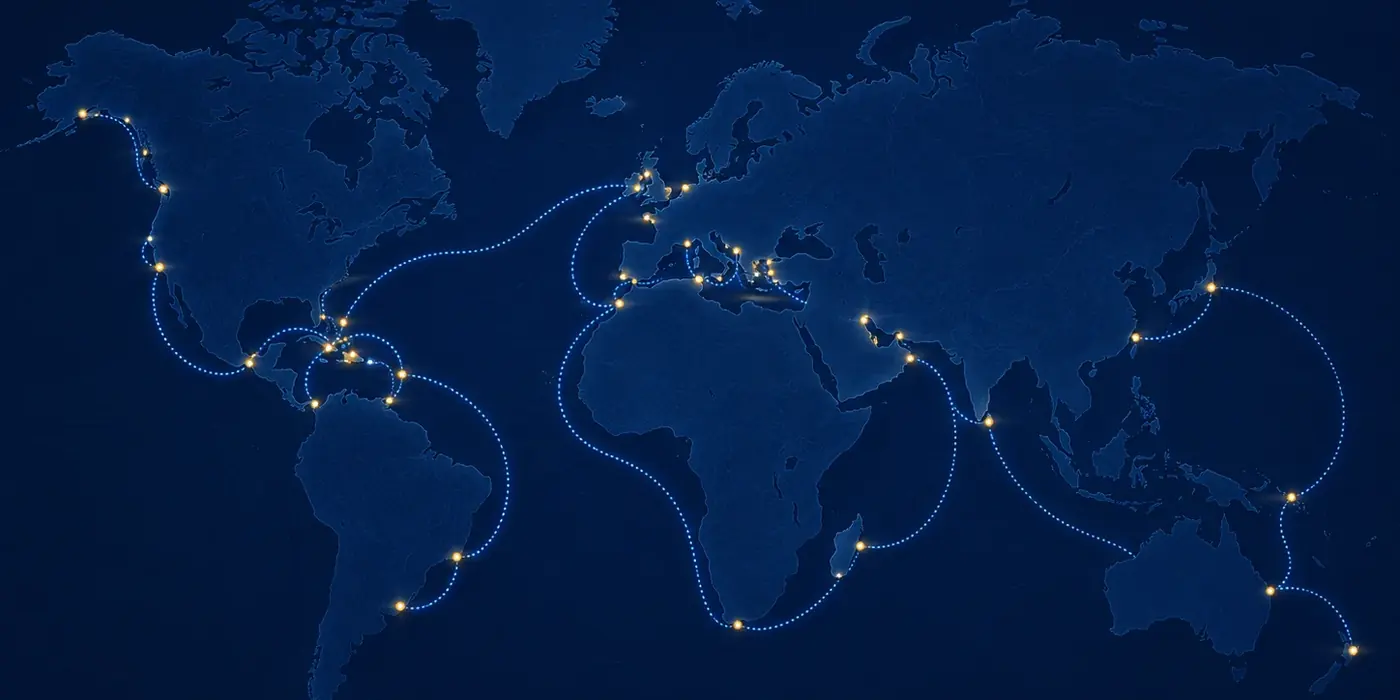
A fleet rarely flies one flag. Vessels are registered where the commercial and regulatory arithmetic makes sense, and that arithmetic changes over time, so an operator with a dozen ships can easily be answering to several administrations at once. Each of those flag states sets its own requirements on top of the international baseline.
The operational question that follows is not which flag is easier. It is whether you can run one crew process across all of them without either flattening the differences or maintaining a separate way of working per registry.
What the flag state decides, and what it does not
International conventions set the floor. STCW governs the standards for training, certification and watchkeeping. MLC 2006 covers seafarers' employment conditions, living and working arrangements, and entitlements including rest. The ISM Code requires a safety management system and holds the company responsible for operating it.
The flag state is the country of registration, and it implements that baseline in its own instruments — issuing or recognising certificates, defining endorsement requirements, setting the safe manning document for each vessel, and specifying what documentation must be carried. Two vessels running identical trades under different flags can therefore need different endorsements for the same rank, and different paperwork to prove the same competence.
"The differences between flag states are real, small and numerous. That combination is exactly what defeats a process held together by people remembering things."
Two ways operators get this wrong
The first failure is standardising too hard. A single checklist applied to every vessel, built around the most common flag, quietly under-serves the others. It looks like consistency on a shore dashboard and produces findings at the gangway. The second failure is the opposite: each vessel or each manning office develops its own way of working, which is locally correct and collectively unmanageable. Nobody can answer a fleet-level question, because there is no fleet-level anything.
Both come from the same missing distinction. The process should be uniform — how a crew member is onboarded, how a certificate is recorded, how an expiry is escalated, who signs off. The requirements should be per vessel, because that is where they genuinely differ. Conflating the two forces a choice between rigidity and chaos.
Configuration per vessel, process per fleet
In practice this means the requirement set is data, not procedure. Each vessel carries its flag, its trade and its safe manning position, and the requirements for a given rank resolve from those rather than from a document someone maintains by hand. An assignment either satisfies the requirements for that vessel or it does not, and the answer is computed rather than remembered.
The payoff is that a rotation change stops being a research task. When a chief engineer moves between two vessels under different flags, the question of whether their endorsements carry across is answered before the assignment is confirmed, not discovered during a port state control inspection. It also means one readiness view across the fleet is honest, because it is aggregating comparable answers rather than averaging different standards.
This is the argument for a shared core with per-vessel configuration rather than one system per registry — the same reasoning that runs through one system from departure to arrival, applied to regulatory variation instead of voyage stages.
CruiseControl holds crew records, certifications and assignments on one platform while letting requirements differ by vessel, so a multi-flag fleet runs one process without pretending the flags are interchangeable. How the platform is structured covers the architecture; how a rollout runs covers mapping it to a fleet that already exists.
Priscilla coordinates how CruiseControl rolls out across fleets, turning implementation plans into working operations.